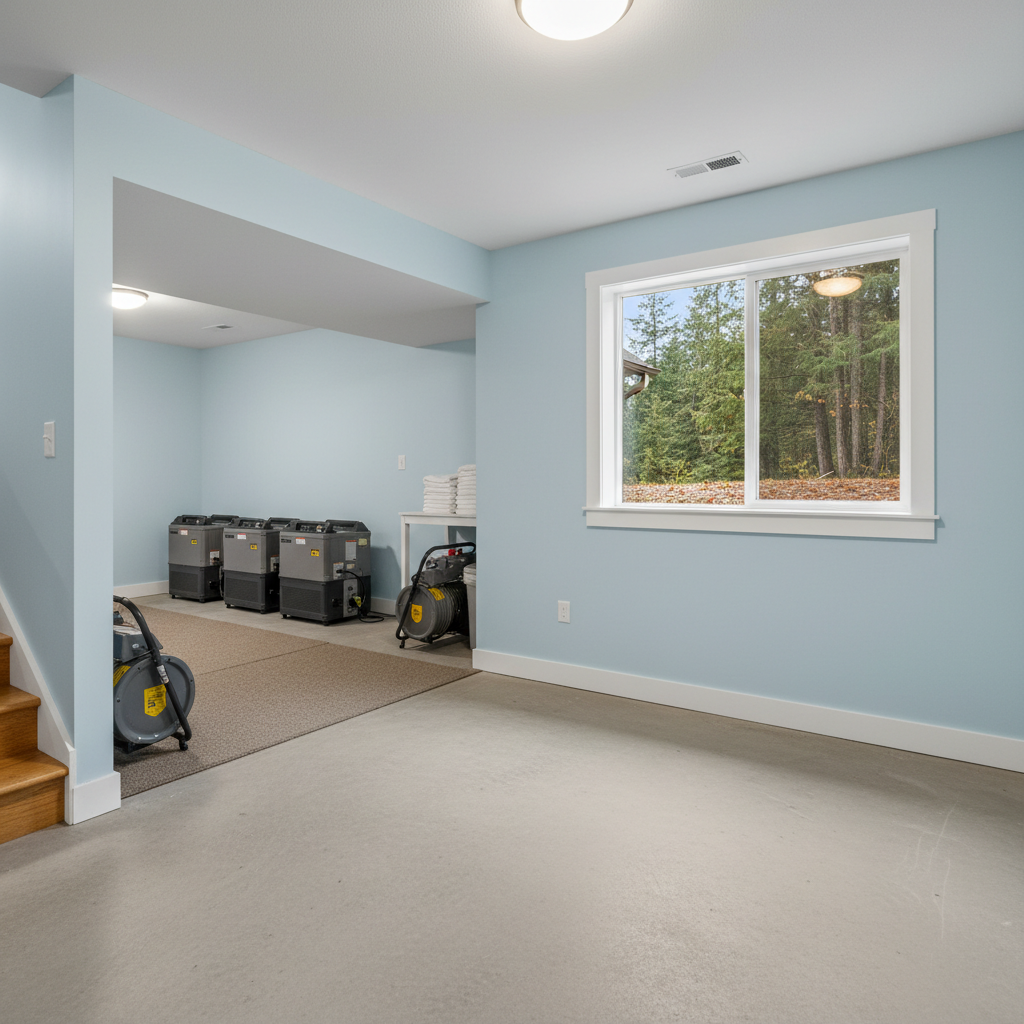
If you live out here near the foothills, you already know that water management is a constant battle against our local climate. Between the heavy autumn atmospheric rivers and those sudden spring thaws running down the South Fork Stillaguamish, local soil stays saturated for months on end. When the ground gets that heavy and wet, hydrostatic pressure builds up fast against foundation walls. Here is what you need to know about timing your basement water removal and keeping your property safe.
Understanding the Local Weather Triggers
Most property owners call Solid Shield Restoration right after a prolonged heavy downpour or when a rapid warm snap melts the mountain snowpack overnight. Our regional soil contains plenty of clay and glacial till, meaning the soil does not drain quickly. When rain pounds down day after day, that water pools against your foundation instead of soaking away. If you have a basement, you will often see seepage start around floor joints, window wells, or hairline cracks before you notice standing puddles.
Weather conditions heavily affect how fast we can dry out a below-grade space. High outdoor humidity and dropping autumn temperatures slow down standard evaporation rates. Solid Shield Restoration uses commercial dehumidifiers and specialized air movers rather than just setting up a household fan.
When to Schedule Maintenance and Inspections
Timing matters quite a bit if you want to avoid major problems with Water Damage Restoration. Do not wait until the first major freeze or a torrential downpour to check on your lower level. Solid Shield Restoration tells homeowners to schedule a thorough check of their drainage systems, sump pumps, and foundation seals right before the heavy rainy season kicks in hard during late September or October. Catching a failing pump or a cracking foundation wall early saves you from emergency extraction in the middle of the night.
- Test your sump pump by dumping a bucket of water into the pit before the rainy months hit.
- Clear out gutters and push downspouts at least six feet away from your exterior walls.
- Inspect window wells for debris buildup that traps standing water against glass panes.
Protecting Your Investment Year-Round
Keeping water away from your foundation takes consistent effort. Make sure the soil immediately surrounding your house slopes downward so runoff moves away rather than pooling against the concrete. If you notice damp corners, musty odors, or efflorescence, which is that white powdery residue on concrete block walls, address it right away. Small moisture issues turn into major structural repairs if left unchecked through a wet Northwest winter. Staying proactive is the easiest way to keep your home solid and dry in Granite Falls.